Pole afektywnego przejęcia
Galeria Baszta Kraków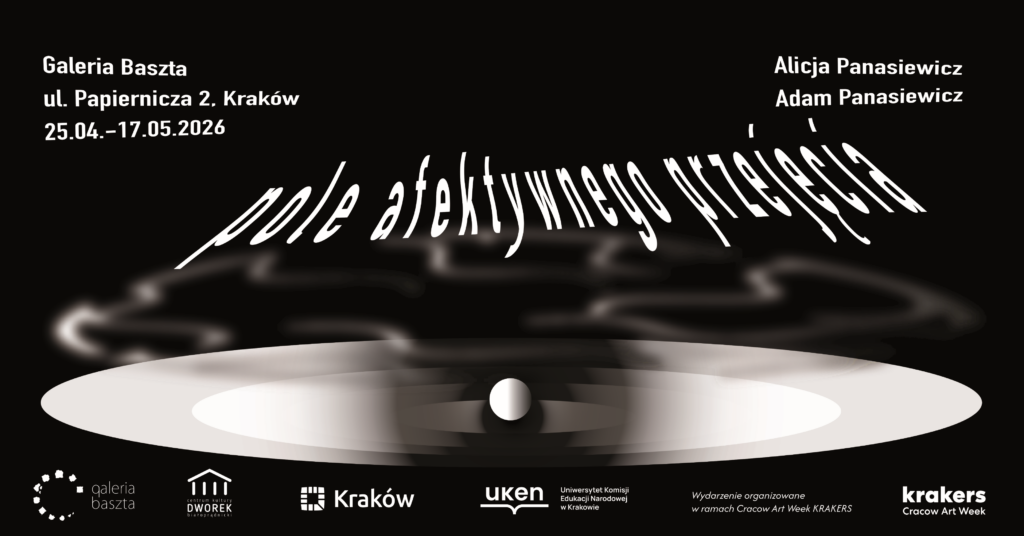
english below
kuratorka: Dorota Halberda
kwiecień/maj 2026
W cylindrycznych ruinach XVI-wiecznej baszty relacje między widzem a przestrzenią, przeszłością a teraźniejszością ulegają przekształceniu. Miejsce staje się instrumentem i polem oddziaływania, w którym pejzaż audialny przywołuje nieobecną architekturę.
Projekt odwołuje się do pojęcia afektywnego przejęcia – sytuacji, w której ciało odbiorcy absorbuje wibracje i reaguje na nie somatycznie. Dźwięk, światło, drgania oraz subtelne obrazy tworzą immersyjne środowisko, w którym percepcja słuchowa, wizualna i dotykowa przenikają się i wzajemnie wzmacniają. W rezultacie odbiorca może niemal fizycznie odczuć obecność dawnej struktury, pamięć miejsca oraz jego genius loci.
Instalacja proponuje wielozmysłowe doświadczenie przestrzeni jako formę rekonstrukcji niematerialnej — nie poprzez obraz, lecz poprzez rezonans i odczucie. Stanowi jednocześnie artystyczną interpretację historycznego kontekstu oraz refleksję nad relacją między architekturą, dźwiękiem a ciałem w przestrzeni naznaczonej upływem czasu.
Punktem wyjścia jest obecny stan baszty: zachowana kamienna podstawa o kolistym planie, zlokalizowana w piwnicznej części dworku, dziś zaadaptowanej na galerię. Szczególna akustyka, materialność kamienno-ceglanych fundamentów oraz warstwowość historyczna przestrzeni stają się impulsem do badań nad pamięcią architektoniczną i możliwością jej przywołania poprzez dźwięk.
Field of Affective Resonance
curated by Dorota Halberda
Within the cylindrical ruins of a 16th-century tower, the relationships between the viewer and space, past and present, are transformed. The site becomes both an instrument and a field of interaction, where an auditory landscape evokes an absent architecture.
The project draws on the concept of *affective capture*—a condition in which the recipient’s body absorbs vibrations and responds to them somatically. Sound, light, vibrations, and subtle visual elements create an immersive environment in which auditory, visual, and tactile perception intertwine and reinforce one another. As a result, visitors may almost physically sense the presence of the former structure, the memory of the site, and its *genius loci*.
The installation proposes a multisensory experience of space as a form of immaterial reconstruction—not through representation, but through resonance and sensation. At the same time, it offers an artistic interpretation of the historical context and a reflection on the relationship between architecture, sound, and the body within a space marked by the passage of time.
The starting point for the project is the tower’s present condition: a preserved circular stone foundation located in the basement of a manor house, now adapted as an art gallery. The unique acoustics, the materiality of the stone-and-brick foundations, and the layered history of the site provide the impulse for an exploration of architectural memory and the possibility of reactivating it through sound.
photos: Wojciech Prażuch


